Commercial Waste Belmont — Recycling and Sustainability for an Eco-Friendly Waste Disposal Area
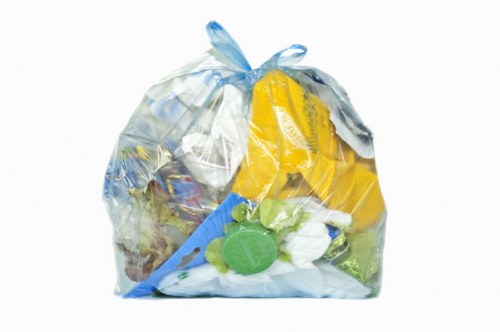 Commercial Waste Belmont is committed to creating a resilient, eco-friendly waste disposal area that supports local businesses and the wider community. Our approach to recycling and sustainability focuses on practical measures that make sustainable rubbish area management straightforward and measurable. We work to align commercial waste in Belmont with borough-level priorities, encouraging kerbside-style separation where possible and supporting mixed-stream improvements to increase capture of paper, card, glass and food waste. Clear separation at source is the most effective first step.
Our sustainability plan sets a clear recycling percentage target for the commercial sector: we aim for a 65% diversion rate from landfill across Belmont commercial accounts by 2030. This target is ambitious yet achievable through coordinated efforts — combining recycling services, reuse partnerships and investment in low-emission transport. To track progress we provide quarterly audits and transparent reporting that help businesses measure reductions in residual waste and improvements in their recycling streams.
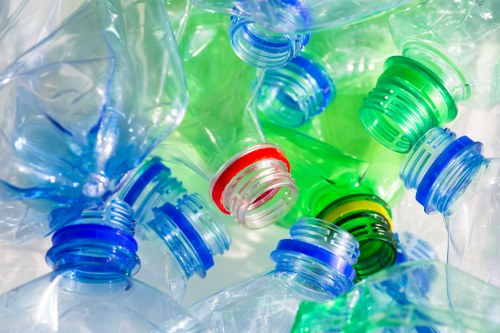 A practical part of creating a sustainable rubbish area is the logistics network. We operate scheduled collections using low-carbon vans and optimize routes to minimise mileage and emissions. Many boroughs around Belmont have adopted a multi-bin approach — separate containers for dry recyclables, organic waste and residual refuse — and our fleet is configured to collect and transport separated loads to the appropriate local transfer stations promptly, reducing contamination and improving recycling rates.
Local Transfer Stations and Circular Partnerships
Our services connect commercial premises to nearby transfer stations and materials recovery facilities. These local hubs play a crucial role in an efficient eco-friendly waste disposal area: they consolidate loads, provide sorting capacity and link materials to recycling processors. We prioritise transfer stations that support high-quality recycling and material recovery, and we actively route specialised streams (wood, metal, food waste) to facilities that can process them into new products or compost.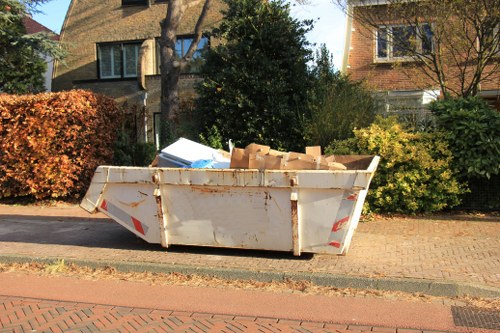 Partnerships with charities are central to our reuse and diversion strategy. We collaborate with local social enterprises and charities to redirect good-quality furniture, textiles and surplus office supplies back into the community. Typical partnerships include:
- Local furniture charities that refurbish and redistribute office seating and desks
- Textile recyclers and social enterprises that provide training and employment
- Food redistribution charities that collect safe surplus from businesses for community use
These collaborations not only reduce landfill but also create social value. By designating a portion of our collections for charity reuse, we support circular economy outcomes while easing pressure on the waste stream. In many Belmont boroughs, business waste separation rules make it easier for donated items to be collected and processed quickly, which maximises reuse potential.
Low-Carbon Vans, Training and Site Design
Our fleet includes modern low-carbon vans and electric-assisted vehicles where routes and depot infrastructure permit. These vehicles deliver collections with significantly reduced CO2 and NOx emissions compared with older models. We pair vehicle investment with driver training and route optimization software to lower fuel use and emissions further, contributing to the area’s sustainable rubbish area objectives.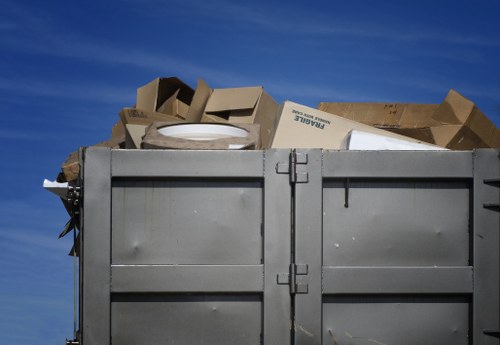 Businesses benefit from practical on-site measures that improve recycling performance: clearly labelled bins, internal segregation zones, and compactors or balers for high-volume streams. Training sessions for staff explain why separation matters and how to avoid contamination. Regular monitoring and bin audits help businesses understand where improvements can be made and quantify savings. Our compliance teams also advise on local borough policies so that commercial waste in Belmont adheres to regulatory expectations.
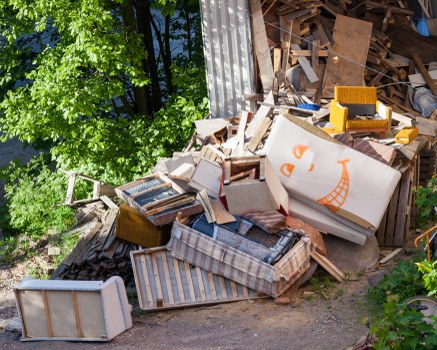 Measuring progress is essential. We report recycling percentages, contamination rates and carbon savings for each account, enabling continuous improvement. Our target of 65% commercial recycling by 2030 is supported by concrete initiatives: diversion to charities and repair shops, dedicated collections for food waste, glass and metals, and the use of low-emission vehicles. By coordinating with transfer stations, charity partners and borough waste teams, Commercial Waste Belmont helps create a truly sustainable rubbish area that benefits businesses, residents and the environment.
To summarise, our integrated approach to Belmont commercial waste management combines infrastructure, partnerships and operations: optimised collection logistics, accessible transfer stations, charity reuse routes and a greener vehicle fleet. We emphasize the need for reliable separation systems at source and close cooperation with borough-level waste separation schemes to maximise recycling potential. The result is a robust eco-friendly waste disposal area that reduces landfill, lowers carbon emissions and returns value to the community.
Commercial Waste Belmont remains focused on continuous improvement. Our plans include exploring more electric vans, expanding charity and reuse networks, and piloting localised materials hubs to shorten supply chains. These measures, paired with clear targets and reporting, will help the area meet its sustainability goals and set a benchmark for commercial recycling and sustainable rubbish area management.
We invite all Belmont businesses to engage with the sustainability process—review collection contracts, adopt clear separation practices and consider donation pathways for reusable items. Together we can reach our recycling percentage target, support local transfer stations and charity partners, and operate a low-carbon, efficient system that protects the environment and strengthens the local economy.
